
If you work at an insurance carrier, there’s a good chance you’ve had this conversation: “Yes, our policy administration system is old, but it works. Replacing it would be a nightmare.”
We get it. A core system touches nearly everything: quoting, rating, billing, claims, reporting, and compliance. Nobody wants to be the person who breaks it. But there’s a point where keeping the old system running quietly costs more than replacing it. The trick is knowing when you’ve crossed that line.
Here are seven signs it may be time to start planning a policy administration system replacement, plus a practical way to approach a migration so it doesn’t become the project everyone dreads.
1. Launching a new product takes months, not weeks
When a new program, coverage option, or state filing requires a long IT backlog and a handful of developers, your system is steering your strategy instead of supporting it. Modern platforms let business users configure products, rules, and forms without rewriting code. pasCarrier.Net is built around that idea: it’s highly configurable, so you can shape it around your lines of business and the way your team actually works. If your competitors can go to market faster than you can, that’s a signal worth paying attention to.
2. Everything depends on a few people who know how it works
Every carrier has a person (or two) who understands the quirks of the old system. They know which batch job to rerun, which workaround keeps billing on track, and where the documentation should be. That’s a lot of risk resting on a few shoulders, especially as experienced staff retire or move on. If “ask Dave” is part of your disaster recovery plan, it’s time to think about it.
3. Your systems don’t talk to each other
Policy in one system, billing in another, claims in a third, and a patchwork of spreadsheets and manual uploads holding it all together. Each handoff is a chance for errors, delays, and duplicate data entry. A connected platform where policy, billing, and claims share the same data cuts out much of that rework and gives your teams one version of the truth. That’s the idea behind pasCarrier.Net, which handles submission, quote, and policy management for P&C lines of business in a single system, and it connects seamlessly to the rest of the PAS products.
4. Reporting feels like a scavenger hunt
If pulling a simple loss ratio or premium report means exporting from several places and stitching it together by hand, you’re spending expert time on data wrangling instead of analysis. Leadership, reinsurers, and regulators all want accurate numbers, and they want them faster than they used to. Clean, centralized data makes that possible.
5. Integrations are painful or impossible
Agent portals, insured self-service, third-party rating and data services, and reinsurance tools are now table stakes. Older systems often weren’t built for this kind of connectivity, so every integration becomes a custom project. A modern, open architecture makes plugging in new tools far less of an ordeal. pasCarrier.Net, for example, connects seamlessly to other vendors’ systems as well as to the rest of the PAS suite, so bringing in the tools you already rely on doesn’t mean starting from scratch.
6. Maintenance and workarounds keep growing
Here’s a quiet warning sign: your team spends more and more time maintaining the system and less time improving anything. Patches, custom fixes, and manual workarounds pile up. Add the cost of aging hardware, specialized skills that are getting harder to hire, and vendors winding down support, and the “cheap” option isn’t so cheap anymore.
7. Security and compliance are a growing concern
Carriers face rising expectations around data protection, audit trails, and vendor oversight. Older platforms can struggle to keep up. Working with a vendor that maintains independent security certifications, such as SOC 2 Type II, can take a real load off your compliance team and give your partners more confidence.
Good news: migration doesn’t have to be a horror story
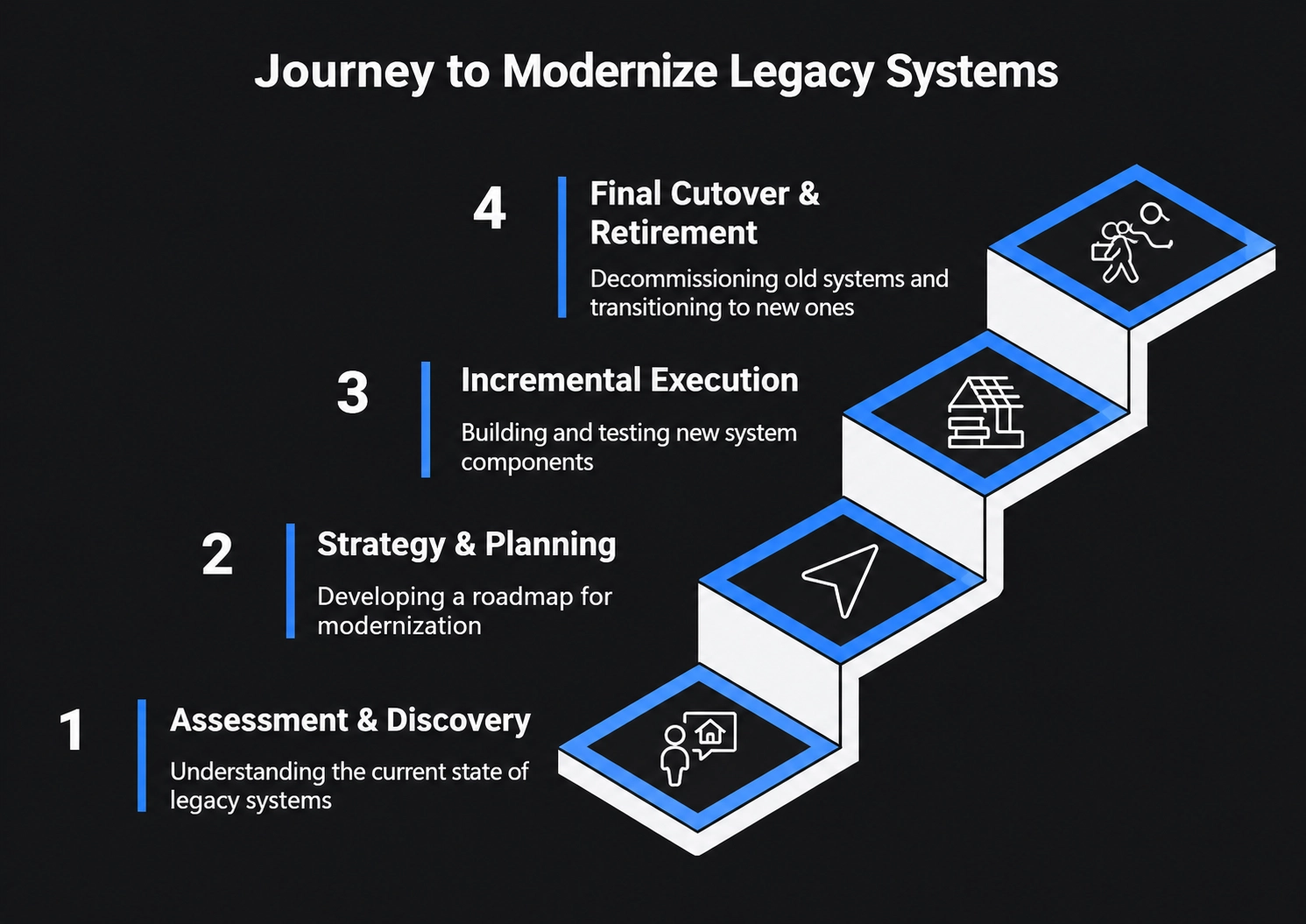
Most fear of insurance core system modernization comes from stories of projects that ran long, ran over budget, or disrupted the business. Those risks are real, but they’re manageable with the right approach.
Start with the business problems, not the technology. Be clear about what you need to improve: speed to market, data quality, operating costs, customer experience. That keeps the project focused and makes it easier to measure success.
Map your data early. Data migration is where many projects stumble. Understand what you have, what’s worth moving, and what needs cleaning up before anything is converted.
Don’t try to boil the ocean. Phasing the rollout by line of business, by state, or by function can reduce risk and let your team learn as you go. One PAS carrier client, who prefers to remain anonymous, took exactly this approach: they went live on pasCarrier.Net in 90 days with a single line of business in a single state, and each new state for that same line took less than 30 days.
Involve the people who use the system every day. Underwriters, billing staff, and claims adjusters know where the real pain points are. Bring them in early and they’ll be your biggest advocates later.
Choose a partner who knows insurance. A vendor who understands P&C operations, from rating and billing to claims and reinsurance, will ask better questions and spot problems sooner than a generalist technology firm.
Plan for testing and training. It’s tempting to squeeze these at the end. Resist. Thorough testing and good training are what make go-live day uneventful, which is exactly what you want.
The bottom line
Replacing a legacy policy administration system is a big decision, but staying put is a decision too, one with costs that tend to grow quietly over time. If several of the signs above sound familiar, it’s worth exploring your options before the pressure gets urgent.
Ready to talk it through?
At Policy Administration Solutions, we’ve been helping P&C carriers, sureties, and MGAs modernize since 1996. Our highly configurable P&C policy admin software, pasCarrier.Net, covers submission, quote, and policy management for P&C lines of business, and the wider PAS suite adds pasBilling.Net for billing, pasClaims.Net for claims, pasRater.Net rating, pasRE.Net reinsurance, and more, all built on a modern .Net platform. Contact us for a free consultation and let’s talk about what a smooth transition could look like for your team.